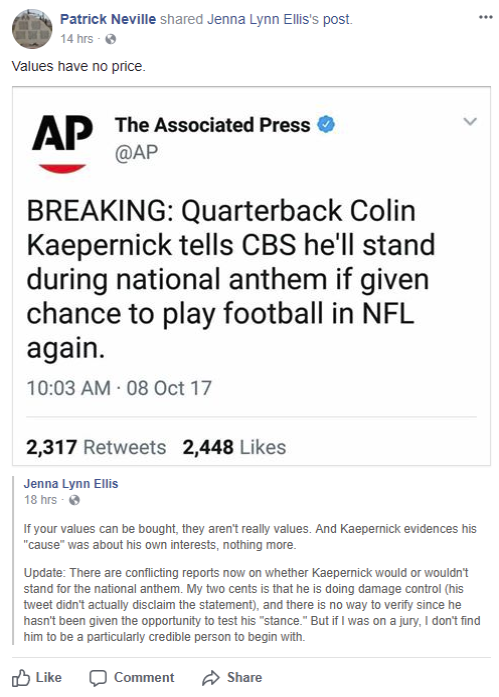
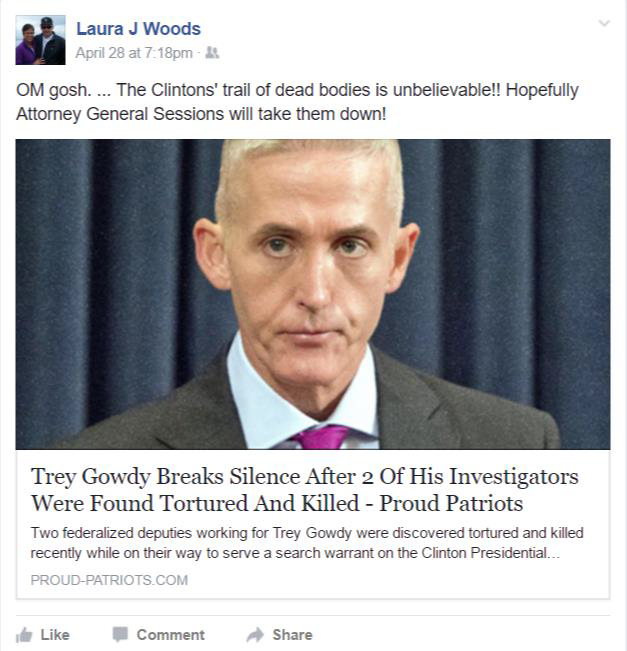
Is fake news in the eye of the beholder, as Colorado political reporter claims?
Thursday, January 4th, 2018In a blog post about Colorado’s 2017 Fake News Awards, which I bestowed last month to a group of Democratic and Republican officials, ColoradoPolitics reporter Dan Njegomir wrote that fake is “in the eye of the beholder.”
But aren’t there objective ways a journalist can identify fake news? Like fact checking?
I emailed Njegomir and told him his eye-of-the-beholder view runs contrary to a tenant of journalism (and civility), which is that many facts, but not all, can be proven true (or false). And fact checks can be reported by journalists (and even liberal bloggers like me).
“I in fact agree with you that the news media have a responsibility to sift fact from fiction and put things in perspective,” Njegomir responded. “My point in observing that fake news is in the eye of the beholder is that the expression itself has been so overused and widely appropriated as to have no objective value. So, it can mean whatever you want. If you don’t like my news, it’s ‘fake.’ Same if I don’t like yours. Rarely does the accuser attempt to assess the actual veracity of the news report. ‘Fake news’ has become an all-purpose pejorative, kind of like ‘Nazi.’ But where it took ‘Nazi’ generations to achieve its all-purpose, ever-morphable meaning, it took ‘fake news’ less than a year.”
I’m one of the those people who accuses others of spreading fake news, and though I’m accused of being fake news myself, I honestly try to assess veracity. But, alas, many who toss out the “fake news” salvo, like Trump, don’t care about the facts.
So Njegomir has a point that the term “fake news” is abused and lacks a precise definition.
But it’s still broadly understood as information from a news outlet that’s false.
As such, a discussion about whether something is “fake news” provides a framework for old-fashioned fact checking that’s less likely to put people to sleep than a discussion about “fact checking” itself, even though a fact checker and a fake-news cop are one and the same. They use research tools to prove truth or fakeness.
And the effort to spotlight and fight the spread of fake news has collateral benefits, like emphasizing the value of real journalism and the role of reporters as the arbiters of truth in civic discourse.
Bottom line, “fake” isn’t in the eye of the beholder. We should take advantage of people’s interest in fake news and argue about whether something is actually fake. And sometimes we can agree with each other.
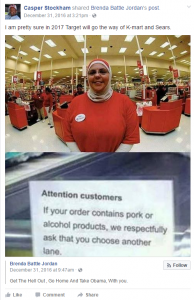 Sometimes we ask people to remove fake news, once determined to be false by outside fact checkers, and lawmakers ignore us (e.g., former State Rep.
 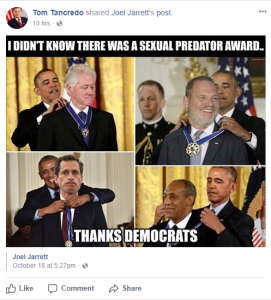 It’s been a depressing year on the fake news beat, but there’s hope on the home front.
 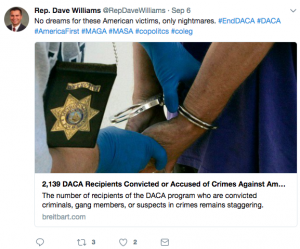 Despite the fact that immigrants are much less likely to commit crimes than the rest of the U.S. population, you’d think they were responsible for 83 percent of crimes committed on American soil if you only got your news from the Facebook timeline of state Rep. Dave Williams (R-Colo. Springs). Williams, who is a strong opponent of sanctuary city policies and even pushed
 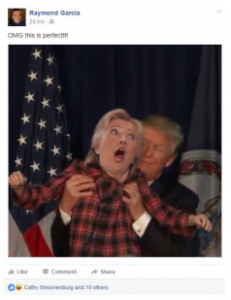 A failed GOP candidate for Colorado’s House of Representatives, Raymond Garcia’s offensive, inaccurate, and downright cringe-worthy Facebook timeline earns him the satirical title of Mr. Congeniality. His
 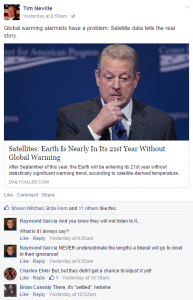 Global warming is a big priority for us fake news cops, so naturally we were alarmed when we saw State Sen. Tim Neville (R-Littleton) spreading fake news headlined, “Satellites: Earth Is Nearly in Its 21st Year Without Global Warming.” The